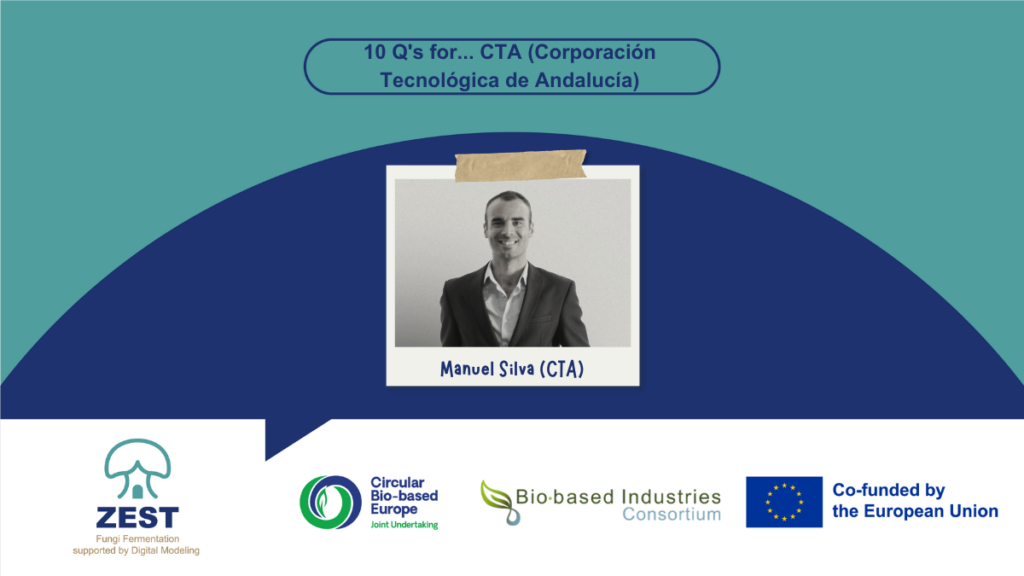
This section seeks to introduce each beneficiary, explain their sector, and describe their work in the project. Today it is the turn of Manuel Silva, from CTA (Corporación Tecnológica de Andalucía).
What’s CTA (Corporación Tecnológica de Andalucía)?
CTA (Corporación Tecnológica de Andalucía) is Andalusia’s leading innovation cluster, bringing together companies, universities, research centres and public organisations to drive innovation and competitiveness.
For more than 20 years, we have supported organisations in developing and implementing R&D&I projects, helping them identify opportunities, build partnerships and access funding at regional, national and European levels.
CTA is also an experienced partner in international innovation initiatives, having participated in nearly 75 projects funded through programmes such as Horizon Europe, Horizon 2020, Interreg, Erasmus+ and Digital Europe. Through these activities, we help connect industry, research and public authorities to address major societal and technological challenges.
Our headquarters are based in Seville and we also have offices in Málaga, Granada, and Brussels.
How long have you been working at CTA and what’s your background and role in the company?
I joined CTA at the beginning of 2024 as a Communication Officer working on European R&D projects. My role involves developing and implementing communication strategies, coordinating dissemination activities across project consortia, managing media and communication channels, monitoring communication KPIs, ensuring compliance with EU visibility requirements, and maximising the outreach and impact of project results.
I hold a degree in Journalism and a Master’s degree in Political Science and Corporate Communications, and I have a strong interest in making research and innovation accessible and engaging for different audiences!
What do you like about your job?
What I like most about my job is the variety. Every project is different, so I am constantly learning about new topics, from renewable energy and the bioeconomy to digitalisation and advanced manufacturing. That keeps the work both interesting and challenging.
I also enjoy the international dimension of the role. Working with partners from different countries and backgrounds gives me the opportunity to exchange ideas, learn from different perspectives and better understand how innovation challenges are addressed across Europe.
Another aspect I particularly value is the cultural and personal enrichment that comes from this international environment. Collaborating with people from different cultures, languages and professional backgrounds broadens your perspective.
This role has also given me the opportunity to visit and work in fascinating cities such as Riga, Hamburg, Lübeck, Porto and Toulouse, to name just a few.
Do you enjoy working on a transnational collaborative project?
Yes, definitely. I’ve had the chance to live and work abroad, so I feel very comfortable in international environments. What I like most is that you’re constantly learning new things from your partners. For example, through ZEST I discovered how important the forestry and wood industry is in Latvia. I had no idea that around half of the country is covered by forests!
Why did CTA join ZEST? What does make ZEST special and intriguing for the CTA?
When we heard about ZEST, we immediately saw its potential. The combination of an excellent consortium and a topic as innovative as fungi-based proteins made it a very attractive project for CTA.
Fungi are often the unsung heroes of the bioeconomy, and being part of a project that helps showcase their potential in the alternative protein sector is both exciting and rewarding.
What is the mission of CTA in the ZEST project?
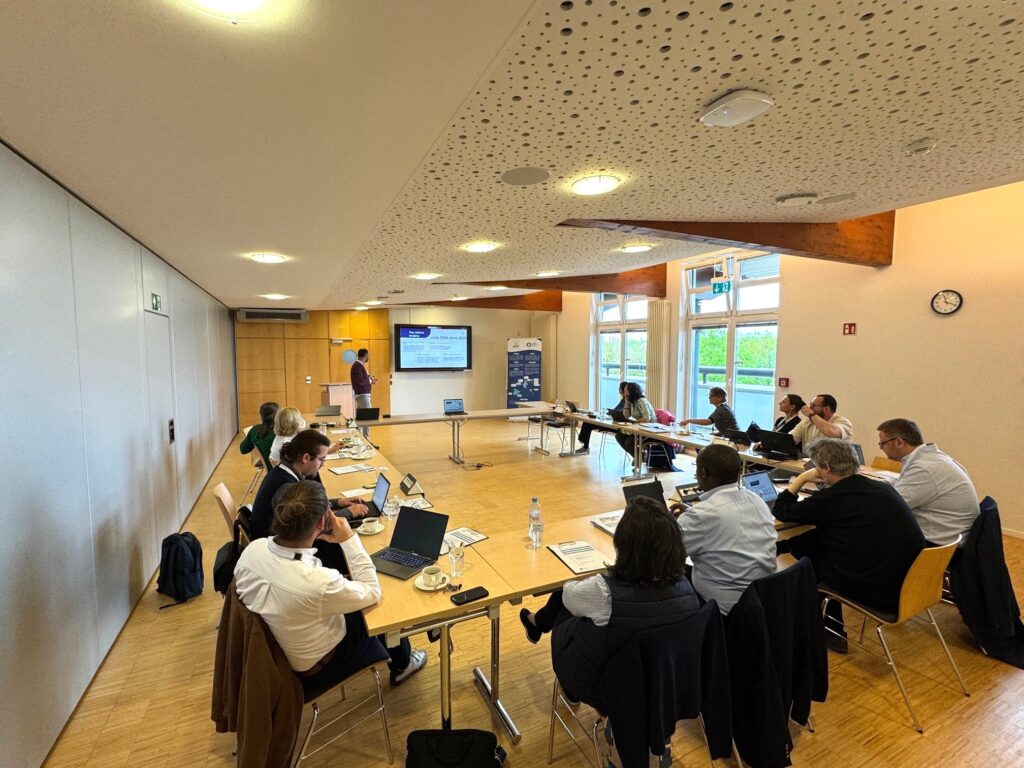
As leader of the Communication and Dissemination Work Package, CTA’s role is to make sure that the knowledge generated by ZEST does not stay within the project.
We work to communicate its results in an engaging and accessible way, connect with relevant stakeholders and help raise awareness of the potential of fungi-based proteins as part of a more sustainable food system.
Of course, none of this would be possible without the support and collaboration of all the project partners.
What are you working on at this stage?
As ZEST has recently reached its midpoint, we have just completed the project’s mid-term Dissemination and Communication Report. It is a good opportunity to look back at everything we have achieved so far, from developing communication materials and increasing media visibility to supporting events and stakeholder engagement activities across Europe.
At this stage, our main focus is to build on that momentum, continue raising awareness of fungi-based proteins and ensure that the project’s results reach the audiences that can benefit most from them.
What are the main challenges you are facing currently?
ZEST is a 48-month transnational project involving twelve partners from different sectors across five European countries. One of the main challenges is ensuring effective coordination and communication within such a diverse consortium, where each partner brings its own expertise, priorities and perspectives.
From a communication perspective, another challenge is translating complex scientific and technical concepts into clear and engaging messages that can be understood by different audiences, from researchers and industry representatives to policymakers and the general public.
We are also focused on continuing to explore synergies and strengthen links with other relevant initiatives, such as the Protein Pioneer Cluster, in order to maximise the project’s impact and foster collaboration across the alternative proteins ecosystem.
What are the key findings so far?
From a C&D perspective, one of the key findings highlighted in the project’s mid-term Dissemination and Communication Report is the strong interest that both mainstream and specialised media have shown in alternative proteins. The extensive media coverage, together with the growing number of EU-funded projects, conferences and workshops on the topic, confirms that alternative proteins are becoming an increasingly important priority for the CBE JU and the wider bioeconomy sector.
What do you think the contribution of ZEST will be once the project is completed in scientific, social and economic terms?
If there is one thing I hope ZEST achieves, it is helping fungi-based proteins move from being a niche topic to becoming part of the mainstream conversation about the future of food. Scientifically, the project is generating knowledge and evidence that can support further innovation. Socially, it is helping people become more familiar with alternative proteins and their potential benefits. Economically, it can contribute to the growth of new value chains and business opportunities within the European bioeconomy.
Even after the project ends, I think its greatest legacy will be the networks, collaborations and momentum it has helped create.
Where to find us
X: Follow for real-time project updates, news, and live event highlights.
LinkedIn: Engage with in-depth content, professional insights, and project discussions.
YouTube: Watch inspiring videos and interviews featuring project partners, researchers, and key findings.